
Exploring Consciousness
From £66.33 / month for 3 months
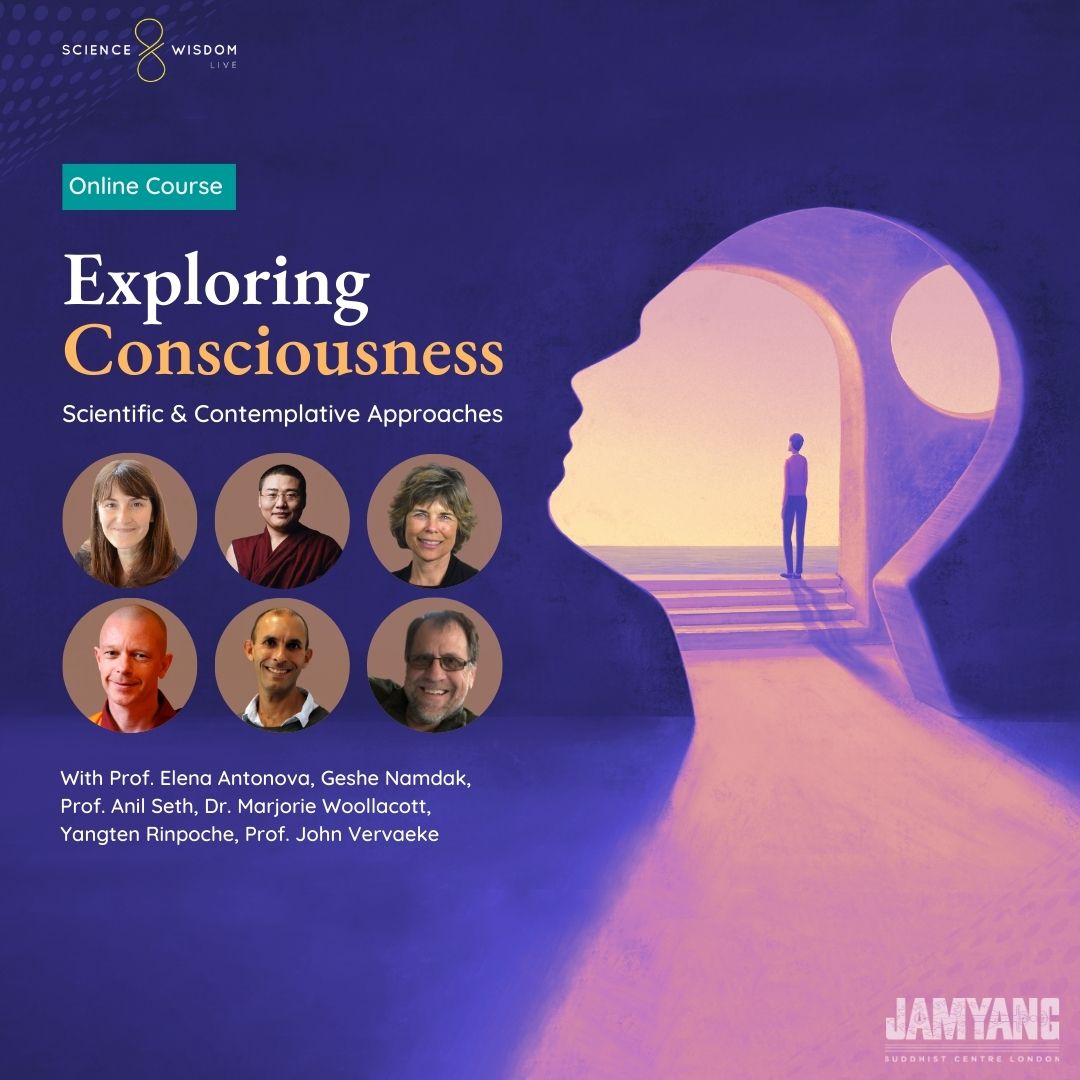
This interactive online course on the Science of Consciousness and Buddhism will provide you with new tools to examine the nature of mind, self, and perception through both scientific and contemplative approaches.
Description
About this Course
This interactive online course on the Science of Consciousness and Buddhism will provide you with new tools to examine the nature of mind, self, and perception through both scientific and contemplative approaches.
By integrating insights from neuroscience, cognitive science, and Buddhist philosophy, the course explores key theories of consciousness and how they shape our understanding of reality. You’ll investigate the relationship between the brain and subjective experience, compare different methods for studying consciousness, and apply mindfulness techniques to enhance self-awareness.
Bringing together leading experts, this course offers a critical and interdisciplinary exploration of consciousness, combining both theoretical insights and practical applications for everyday life.
Learning Outcomes
In this course, you will learn to:
- Understand key theories of consciousness from both Buddhist philosophy and modern science
- Compare and contrast different approaches to investigating consciousness across traditions
- Apply meditation & mindfulness techniques to observe your own conscious experience with greater clarity
- Recognise patterns in your own thinking and perception based on scientific and Buddhist models
- Articulate the relationship between the brain, mind, self, and consciousness
- Engage critically with contemporary debates in consciousness studies
- Integrate perspectives from neuroscience, cognitive science, and contemplative traditions
- Develop a framework for understanding your own subjective experience
What’s Included
- Eight modules, including bonus content
- Multiple lessons per module
- Up to 30 minutes of video content per lesson
- Lecture notes for every lesson
- Self-assessment quizzes for each module
- Guided meditation practices
- Downloadable handbook
Syllabus
Module 1
Consciousness, Self, and the Brain — Prof. Anil Seth
Lesson 1: Consciousness and the Predictive Brain
• Perspectives of Consciousness
• Dimensions of Consciousness
• Predictive Processing
Lesson 2: Uncontrolled Perception, the Self, and Interoception
• Uncontrolled Perception
• Controlled Hallucination of a Self
• Interoception and Its Predictions
Lesson 3: Meditation, Contemplative Dialogue, and Consciousness Distribution
• Meditation and Predictive Processing
• Buddhism and Neuroscience
• Dreamachine and Consciousness Distribution
Module 2
The Cognitive Science of Consciousness — Prof. John Vervaeke
Lesson 1: Consciousness and the Nature of Wisdom
• Neoplatonism – A Bridge Between Science and Spirituality
• Relevance Realisation, Intelligence, and Wisdom
Lesson 2: Nothingness, No-Thingness, and Relationality
• Nothingness and No-Thingness
• Relational and Process-Oriented Science
Lesson 3: Consciousness, Agency, and Morality
• Brain-Consciousness Relationship
• Determinism and Free Will
• Morality and Connectedness
Module 3
Idealism, Consciousness & Spirituality — Dr. Marjoirie Woollacott
Lesson 1: What is Consciousness?
• Materialism and the Hard Problem of Consciousness
• “Idealism – Consciousness as the Basic Substance of the Universe
Lesson 2: Neural Filters
• Neural Filters
Lesson 3: Neuroscience Research Supporting Idealism
• Meditation
• Psilocybin
• Near-Death Experiences
Module 4
The Remedy for the Hard Problem of Consciousness — Dr. Elena Antonova
Lesson 1: Foundations of Consciousness Studies
• Foundations of Consciousness Studies
• Cognitive Science and Functionalism
• Critiques of Reductionism
Lesson 2: Neurophenomenology as a Framework
• What is Neurophenomenology?
• Applications in Mindfulness Research
• Challenges and Innovations
Lesson 3: Groundlessness and Buddhist Integration
• Understanding Groundlessness
Module 5
Consciousness in the Mind-Only School — Geshe Tenzin Namdak
Lesson 1: Consciousness in the Mind-Only School
• Defining Consciousness in the Mind-Only School
• The Nature of Perception and Reality
• Subjectivity and Dualistic Appearances
Lesson 2: The Causal Conditions of Mind-Only Perception
• Storehouse Consciousness and Karmic Imprints
• Habitual Patterns and Mental Constructs
• Refuting Materialist Views of Reality
Lesson 3: Appearance and Reality in the Mind-Only School
• Subjectivity of Perception
• The Relationship Between Appearance and Consciousness
• Implications for Understanding Reality
Module 6
Consciousness in the Middle-Way School — Geshe Tenzin Namdak
Lesson 1: Foundations of the Middle Way
• Avoiding the Two Extremes
• The Nature of Dependent Origination
• Refuting Inherent Existence
Lesson 2: Examining the Three Levels of Dependence
• Dependence on Causes and Conditions
• Dependence on Parts and Wholes
• Dependence on Mental Imputation
Lesson 3: Understanding Self Through Dependent Origination
• Implications of Grasping at an Inherent Self
• Dependent Origination and the Emptiness of Self
• Practical Implications of Dependent Origination
Module 7
Investigating Consciousness in Science and Buddhism — Geshe Tenzin Namdak & Prof. Anil Seth
Lesson 1: The Study of Consciousness
• Neuroscientific and Buddhist Interest in Consciousness
• Definitions of Consciousness
Lesson 2: Self as a Construct
• Defining the Self
• Self and Interdependence
• Interdependence of Perception
Lesson 3: Reality as a Construct
• Meditation
• Neuroplasticity
• Controlled Hallucination
Module 8
Consciousness in Buddhism – Why Does it Matter? — Yangten Rinpoche & Dr. Elena Antonova
Lesson 1: Definitions of Consciousness
• Buddhist Perspective on Consciousness
• Neuroscientific Perspective on Consciousness
• Distinctions of Consciousness
Lesson 2: Importance of Investigating the Mind
• Buddhist Perspective
• Neuroscientific Perspective
Lesson 3: Consciousness Beyond the Brain
• Tukdam
• Research into Brain Regions
• Bridging Contemplative and Neuroscientific Traditions